
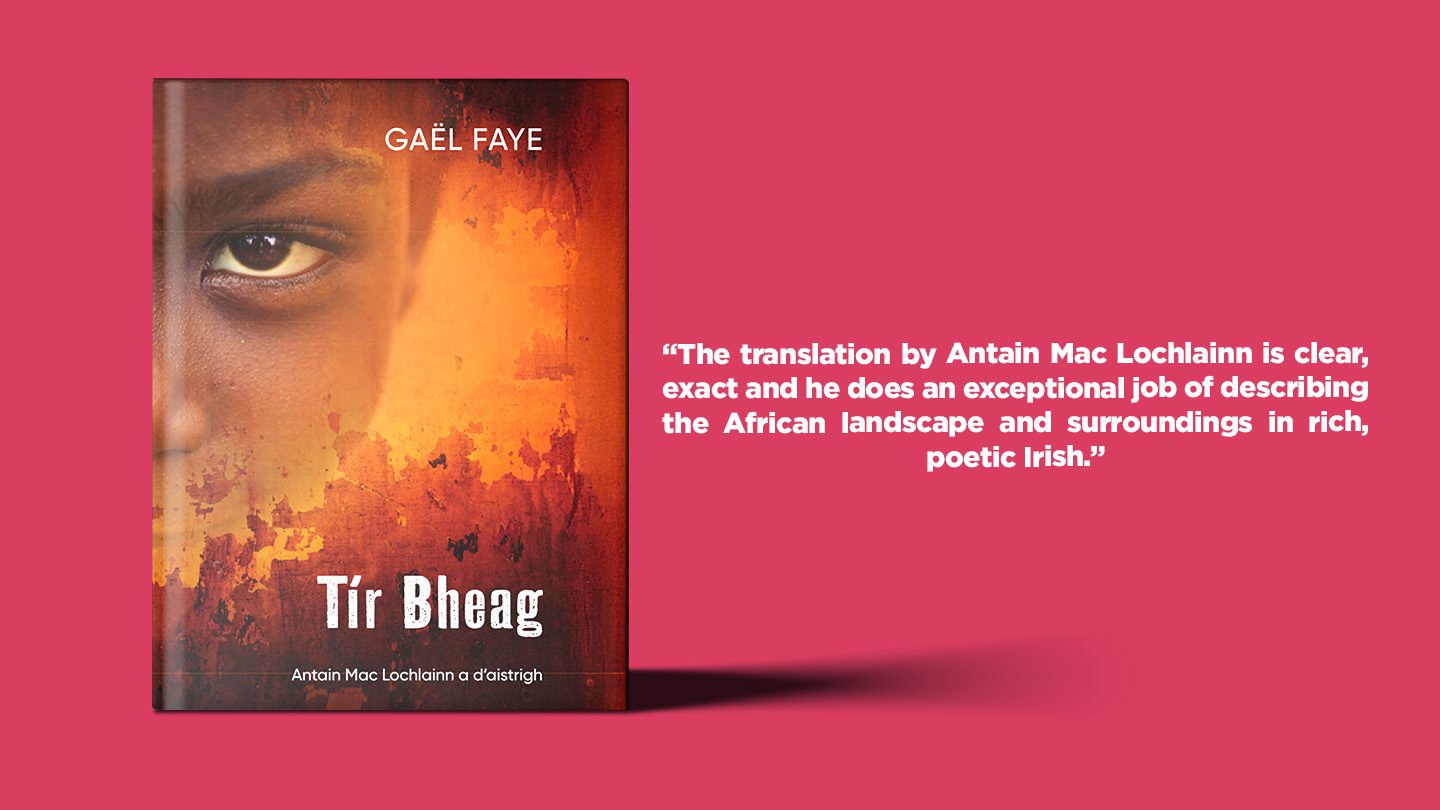
Tír Bheag
Review by: Úna Nic Cárthaigh
In this novel, which is translated from the original French by Antain Mac Lochlainn, we are brought to Burundi in the 1990s. This story is about young man Gabi whose father is French and his mother is of Tutsi descent. It is a coming-of-age story about a boy who is growing up surrounded by war and violence. We understand from the start of the book that Gabi is one of the lucky ones, coming from a middle-class family and living a happy life with lots of friends at school and in his neighbourhood. We also learn that there is a lot of tension between his parents. Gabi describes his life exactly as a young person would, he has no interest in politics or the conflict between the Hutu and Tutsi ethnic groups but he has a lot of interest in his female French penpal, in stealing mangoes with his friends, in swimming and chatting with his pals. The story of war in Africa is presented through the eyes of a child: Gabi doesn’t want to understand what’s happening around him – even when his own friends start to address it, he finds a new hobby in reading in an effort to escape the realities of life. But Gabi must face the music when the conflict intensifies in his mother’s native country of Rwanda and we see Gabi’s innocence and ignorance slip away as his cousins are murdered and his parents’ marriage collapses.
The original book Petit Pays by Gaël Faye won many prizes which is not surprising given the powerful and effective way he describes life in Africa during times of conflict through the eyes of a child. The characters are all relatable and believable and the range of personalities who each clash and bond in different ways really adds to the story, particularly the twins who are friends with Gaby who provide many light moments in the book. The lens of the child is a powerful one and we see the innocence of youth especially at the start of the book when Gabi describes the fighting between the Hutus and the Tutsis as based on having different shaped noses.
There is an underlying tension throughout the book with the sense of violence and war never being too far away. Even when things seem settled and happy in Gabi’s life, the reader never really feels at ease. This is a human story more than anything. As Gabi himself describes, he is not half-French, half-African, but a member of the human race. Many themes are addressed in the book including coming of age, identity and belonging, politics, friendship, heartbreak and war.
The book’s presentation is the usual quality that we associate with Barzaz publications; designed by Anú Design, the orange and red colour reminds us of the forthcoming bloodshed. We are introduced to the idea of the story featuring a young man as the eye of a boy peers out from the spine of the book.
The translation by Antain Mac Lochlainn is clear, exact and he does an exceptional job of describing the African landscape and surroundings in rich, poetic Irish. Antain provides Irish readers with an insight into the landscape, culture and history of Burundi in his special book and aren’t we the lucky ones to be able to read it.